Safeguarding

Our school takes safeguarding children seriously; providing a safe and secure culture where all voices are heard and listened to. 

Aims:
  • Appropriate action is taken in a timely manner to safeguard and promote children’s welfare
  • All staff are aware of their statutory responsibilities with respect to safeguarding
  • Staff are properly trained in recognising and reporting safeguarding issues

All children have the right to be protected from harm; it is every adult’s responsibility to ensure that children are safe and feel safe in every school across the Trust.

It is our vision that no child should suffer harm, either at home or within our Trust. Child protection and safeguarding a child’s welfare is paramount and we will ensure that sufficient resources are made available from our pastoral teams to ensure the best possible outcome for the children.

We are determined that all children will thrive with ongoing advocacy, planning, support, and commitment no matter what a child’s background is.

Designated Safeguarding Lead

H Mourne – Deputy Headteacher Inclusion

Deputy Designated Safeguarding Leads

C Ferla - Headteacher

C Beresford – Deputy Headteacher Curriculum

N Heffernan – Wellbeing Coach

Nominated Safeguarding Lead for Trustees

Sue Butterfill

Our Safeguarding policy is available on our policies page. This policy is called the Child Protection Safeguarding Policy. It is reviewed by staff on an annual basis. Here you will also find other policies relating to Safeguarding including the Online Safety Policy.

We will ensure all policies and procedures in respect of safeguarding children are up to date and in line with latest DfE legislation. Policies and procedures are also reviewed and revised by the Trustees on a regular basis.

We follow safer recruitment protocols at every turn. Amongst many procedures in place during the recruitment period, all staff wishing to work or volunteer with us must undergo a DBS check. We meet statutory requirements in relation to Disclosure & Barring Service – all staff and volunteers who work with us who meet the ‘regulated activity test’ (Freedoms Act 2012) are required to undergo an enhanced DBS check prior to employment.

Within the School we have first aid trained staff who are available during the day to attend to pupils who become ill or have an accident.

Parents are asked to provide a daytime telephone number and an alternative emergency contact so that they can be contacted if necessary.

All medicines must be stored safely within the medical room or class medical box and not be kept on the pupil. If medicines need to be administered to a pupil, this must be discussed with the office and adhere to the guidelines set out in our supporting children with medical conditions policy. 

Organisations and Charities Guidance

Physical Chastisement
Schools have a statutory responsibility under section 175 of the Education Act 2002 to safeguard and promote the welfare of children both in and out of school. 

The Law
UK law protects every child up to the age of 18 years from cruel and abusive treatment by their parents and carers. 
It is against the law for a parent to use physical punishment on their child that causes marks. 
It is illegal to use an implement to hit a child.
Parents who cause deliberate harm to their child could face criminal prosecution. 
It is against the law for anyone who is not the child's parent to use ANY form of physical punishment.
It is also illegal to use prolonged stress positions or to emotionally harm a child.
 

As a parent/guardian you are responsible for disciplining your child(ren) or those under your care when they are not in school. The use of physical force in disciplining them may be illegal in certain circumstances. This may include where an implement ( e.g belt, stick, slipper) has been used or where the use of that force has resulted in visible injury and the use of prolonged physical stress positions. (This is where children are placed in a position of discomfort for a long period of time). In these circumstances the school has a statutory duty to report such incidents to Children's Social Care and the police may be asked to investigate.

Should you want further advice and information on statutory guidance, legislation and parenting support please see:

Bexley Safeguarding Partnership website provides advice for parents and carers, including information on positive and effective discipling method

Below is the guidance from the borough of Bexley relating to disciplining your child.

Child-protection-leaflet.pdf

When you call 0800 1111, you’ll get through to a counsellor, they’re there to listen and support you with anything you’d like to talk about.

Childline is open 24 hours a day, 7 days a week. So you can talk to them at any time.

https://www.childline.org.uk

With the help of our friendly dinosaur Pantosaurus, PANTS is a simple way to talk to your child about staying safe from sexual abuse. Click here to go to the NSPCC Pants page.

YoungMinds are a charitable organisation who work with the Children and Adolescents Mental Health Service (CAMHS) to provide support, advice and counselling to young people experiencing depression, anxiety, bullying and eating difficulties. They offer a parent helpline for parents and carers worried about their children's mental wellbeing.

You can find a guide to support offered at https://youngminds.org.uk/find-help/your-guide-to-support/

Their parental helpline can be reached through 0808 802 5544.

Helping children keep their brains amazing! CUES-Ed is an innovative psycho-education project based in primary schools developed by Clinical Psychologists and CBT therapists from the South London and Maudsley NHS Foundation Trust. To go to their site, click here.

Mind are a nationwide mental health charity who are able to offer information and support for a variety of mental health issues. Working closely with the NHS they have a wide range of resources and information on their website, including an A-Z of Mental Health, advice for helping someone else, guides to support and services and Elefriends - their online community. Everyone is affected by a mental health difficulty at some point in their lifetime and Mind are on hand to help.

Visit their website on https://www.mind.org.uk/

Or call them today on 0300 123 3393 for their info line.

Carers Direct is for anyone who is looking after a family member who is ill or disabled or needs special help. It is part of the NHS website and offers information and advice.

There is a phone number you can call to talk to someone on 0808 802 0202

Or you can visit their website on by clicking here.

Family lives offer a listening and supportive, non-judgemental service for parents. They have a lot of information on their website, including parenting advice videos and forums to chat to other families. They offer online parenting courses too for those wanting to be prepared for parenthood.

You can visit their website on www.familylives.org.uk/how-we-can-help/confidential-helpline  

Alternatively you can call their helpline on 0808 800 2222 for information, advice, guidance and support between 9am-9pm Monday to Friday or 10am-3pm at the weekend.

FGM (Female Genital Mutilation) covers all procedures that intentionally alter/injure the female genital organs for non-medical reasons. All teachers have a mandatory responsibility to report any known case of FGM to the police.

If you believe a child is at risk or has been a victim of FGM then call 01452 426565 or use the NSPCC FGM helpline:

NSPCC FGM Helpline 24 hours Tel: 0800 028 3550

Prevent is designed to support people at risk of joining extremist groups and carrying out terrorist activities.

In practice it aims for police and other organisations to build relations across the UK and requires faith leaders, teachers, doctors and others to refer any suspicions about people to a local Prevent Body. An assessment is then made about whether further action is needed.


Official Government Document

If you see any content online related to terrorism, you can report it anonymously to the Counter Terrorism Internet Referral Unit (CTIRU).

https://www.gov.uk/report-terrorism

Anyone can be a victim of domestic abuse, regardless of gender, age, ethnicity, socio-economic status, sexuality or background.

There are different kinds of abuse that can happen in different contexts. The most prevalent type of domestic abuse occurs in relationships. But the definition of domestic abuse also covers abuse between family members, such as adolescent to parent violence and abuse.

If you recognise yourself or someone you know in the following warning signs and descriptions of abuse, reach out. There is help available.

Useful Contacts:

Bexley Domestic Abuse Services 0808 2000 247 (24-hour domestic violence helpline)

Online Safety

Online Safety

Stay safe on the internet - top tips for parents and carers:

  • Talk with your child about Internet Safety as soon as he/she begins using the Internet. It is never too early to start discussing the importance of being a good digital citizen.
  • Use age-appropriate filtering, blocking and monitoring software on all Internet-enabled devices used by your child, including laptops, wireless phones and video games.
  • Stay involved in your child's online world by setting limits on his/her "screen time" and monitoring who your child is communicating with online. Get to know the websites your child is visiting and educate yourself about your child's online activities. 
  • Explain to your child that he/she should never give out personally identifiable information online. For example, your child should understand that he/she should not post detailed information about his/her whereabouts. 
  • Make sure your child knows never to meet someone they met online face-to-face without first talking with you about the situation.
  • Tell your child to never share their passwords with anyone, including friends.
  • Explain the consequences of posting inappropriate material online. For example, a child's reputation can be impacted by a status entry or an image that is shared.
  • Monitor your child's mobile phone usage and review text messages sent and received, including images downloaded and uploaded.
  • Educate yourself on the latest threats facing kids online (e.g cyberbullying, sexting etc) and arm yourself with information that will allow you to talk to your child about being a good digital citizen.

For more information on staying safe online you can visit: https://www.thinkuknow.co.uk/

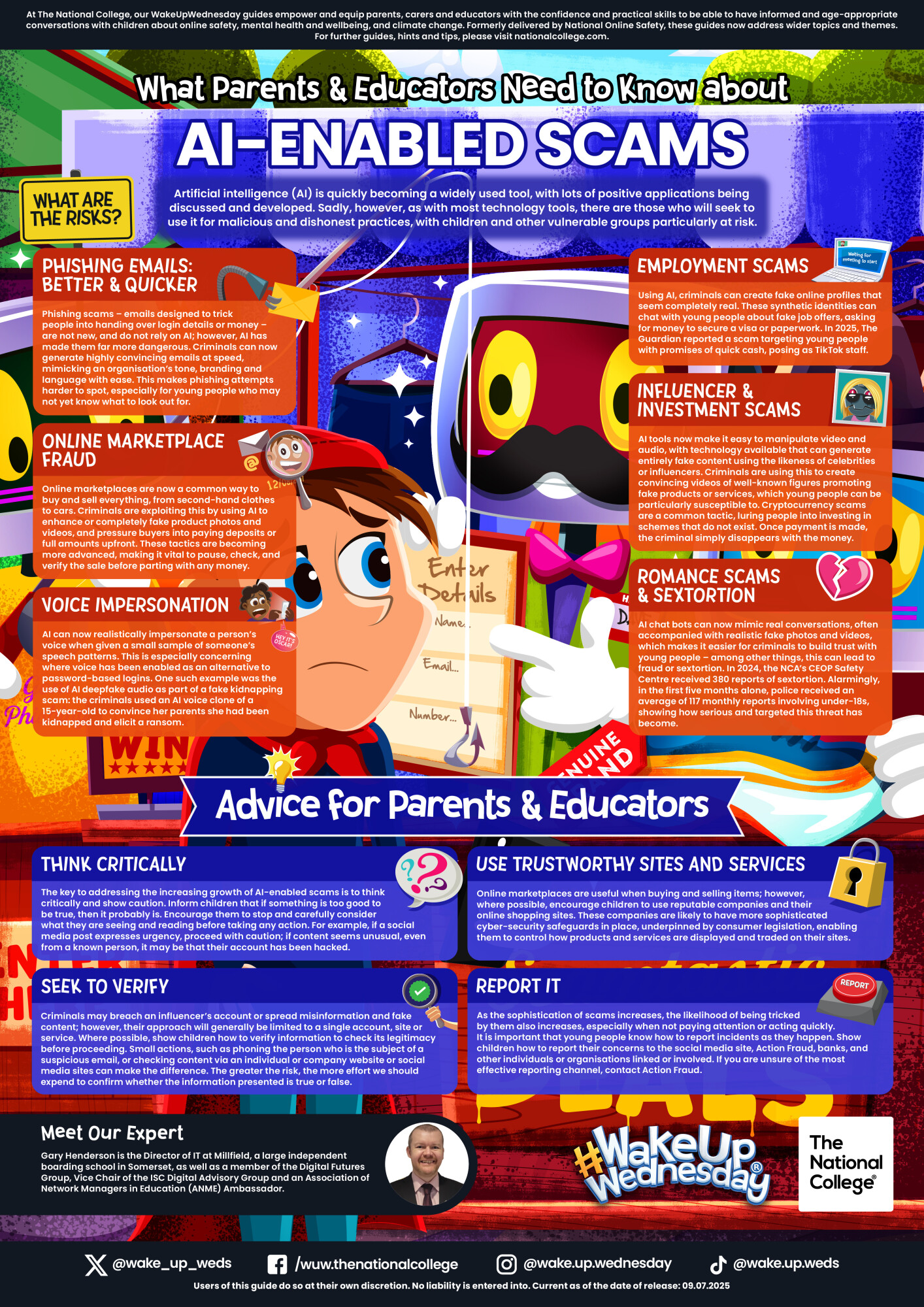
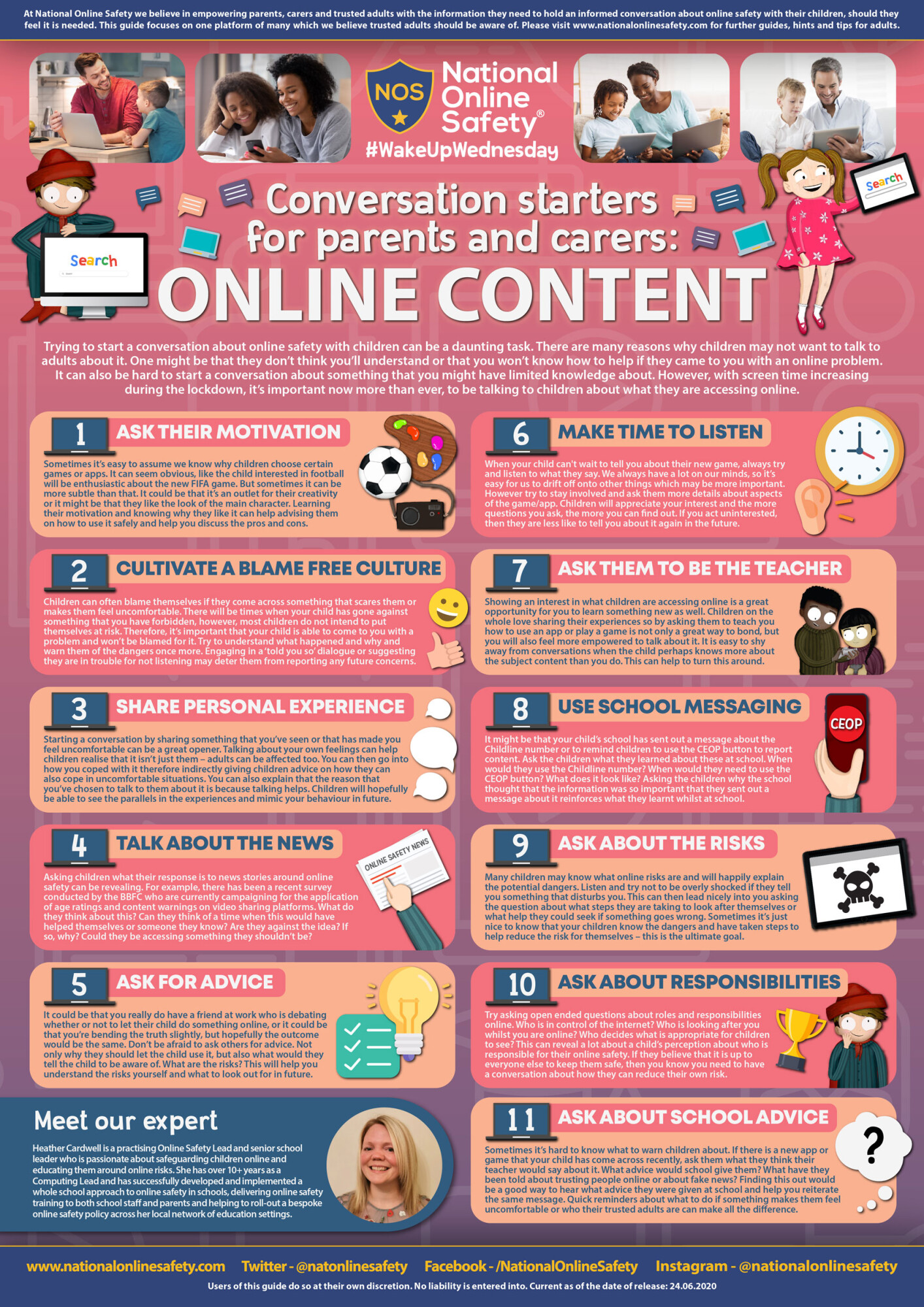
The NOS (National Online Safety) website has plenty of detailed guides on how best to stay safe online. You can visit their site here.

The National Cyber Security Centre has advice on how to stay safe here

Click here for Childnet's advice on what and how to discuss staying safe online with your child. Click here to find ways of starting that conversation.

The government's Thinkuknow website has lots of resources and activities for staying safe. You can view them here

Keeping your children safe online matters.  "Internet Matters" is an independent, not-for-profit organisation which aims to help parents keep their children safe online.  We believe in maximising children’s potential online, while staying safe, and Internet Matters can help parents to address this important issue.  

www.internetmatters.org

If you see any criminal sexual content online, you can report it anonymously to the Internet Watch Foundation.

https://report.iwf.org.uk/en

NSPCC - general online safety guidance for parents

Thinkuknow - Thinkuknow is the education programme from NCA-CEOP, a UK organisation which protects children both online and offline.

UK Safer internet Centre - a partnership of three leading organisations: Childnet International, Internet Watch Foundation and SWGfL, with one mission - to promote the safe and responsible use of technology for young people.

Digital 5 a day - guidance from the children's commissioner (pdf)

Parent zone - comprehensive advice for a digital life

CEOPs - Child Exploitation and Online Protection command (Police)

LGfL- Advice on a range of Online Safety issues

Children's Commissioner -Terms and Conditions for apps written in child-friendly language